
What Happens During a Professional Bed Bug Inspection and Treatment
Learn what to expect from start to finish during a professional bed bug inspection and treatment, including preparation steps, inspection methods, treatment options, and follow-up care.
Waking up with unexplained bites or spotting tiny dark stains on your sheets can quickly turn a peaceful night into a stressful situation. Bed bugs are skilled hitchhikers that can enter Cedar Hill homes on luggage, secondhand furniture, backpacks, or clothing, regardless of how clean a household is. When homeowners try to tackle the problem with store-bought foggers or general aerosol sprays, the pests often scatter deeper into wall voids and neighboring rooms, making the infestation harder to eliminate. Knowing what happens during a professional bed bug inspection and treatment takes the guesswork out of the process and helps you prepare your home for effective, lasting relief.
What Happens Before the Inspection Begins
Before a pest control technician steps through your door, a brief conversation usually takes place to gather background information. You may be asked where bites or signs have been noticed, how long the issue has been going on, whether anyone in the home has traveled recently, and if any over-the-counter products have already been applied.
If you suspect bed bugs, avoid throwing away mattresses or moving bedding from room to room before the inspection. Dragging infested items through hallways can drop eggs or live insects into new areas. Keep rooms as undisturbed as possible so the technician can observe accurate pest activity patterns and locate primary hiding spots right away.
Step 1: The Comprehensive Bed Bug Inspection
A professional inspection is far more detailed than a quick glance under a fitted sheet. Bed bugs are nocturnal, flat-bodied insects that squeeze into spaces no thicker than a credit card, so technicians follow a systematic search pattern starting at the sleeping area and working outward.
Checking Mattresses, Box Springs, and Bed Frames
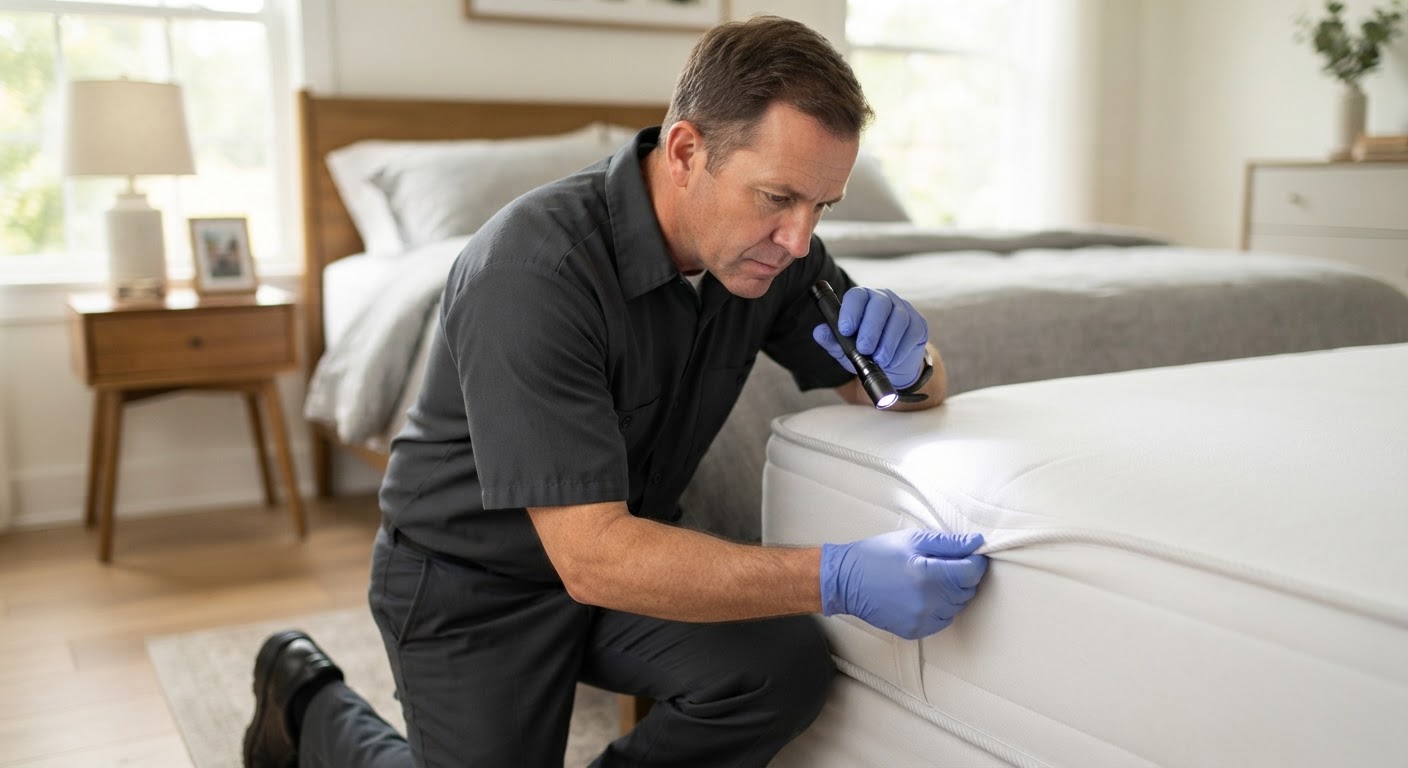
The inspection begins where people spend several uninterrupted hours each night. A technician carefully pulls back bedding and examines mattress seams, piping, tags, and tufts using bright flashlights and magnification tools. They also inspect the underside of box springs, staple lines, dust covers, and the joints, screw holes, and slats of headboards and bed frames.
Inspecting Furniture, Baseboards, and Wall Fixtures
Because bed bugs travel easily within a room, the search expands to nearby upholstered chairs, couches, nightstands, and dresser drawers. Technicians look behind picture frames, along curtain folds, inside electrical outlet covers when accessible, and along carpet edges and baseboards. In multi-unit housing or closely connected living spaces in Cedar Hill, neighboring rooms are often checked as well to determine whether the insects have spread.
Confirming Signs and Ruling Out Look-Alikes
Finding a bug or a bite mark alone does not always mean bed bugs are present. Technicians look for unmistakable evidence, including live nymphs or adults, translucent shed skins, tiny pearly white eggs, and rust-colored fecal spots that bleed into fabric like ink from a marker. Confirming the exact pest ensures you receive the right service rather than an unnecessary treatment for carpet beetles, fleas, or mites.
Step 2: Reviewing Findings and Treatment Preparation
Once the inspection is complete, the technician walks you through what was found, where activity is concentrated, and how severe the infestation appears to be. Every home is different, so a customized treatment plan is built around your floor plan, furniture types, and household members, including children and pets.
You will also receive clear preparation instructions before treatment day. Proper preparation removes clutter that gives bed bugs extra hiding spots and allows technicians full access to baseboards, closets, and furniture frames. Common preparation steps include:
- Stripping bedding, curtains, and nearby clothing and laundering them on the hottest wash and dry cycles safe for the fabrics
- Sealing clean, treated textiles in heavy-duty plastic bags until treatment is complete
- Vacuuming carpets, rugs, and furniture crevices thoroughly and disposing of the vacuum bag or emptying the canister outdoors
- Clearing items from under beds, inside closet floors, and off nightstand surfaces so technicians can treat all cracks and seams
Step 3: Professional Bed Bug Treatment Methods
Professional bed bug control typically relies on an integrated approach rather than a single spray. Because bed bug eggs are protected by a resilient outer shell, technicians combine methods designed to eliminate active insects immediately while addressing newly hatched nymphs over time.
Targeted Liquid and Crack-and-Crevice Applications
Technicians apply targeted pest control products directly to the exact harborages where bed bugs hide, such as bed frame joints, mattress seams where permitted by product labels, baseboard gaps, and furniture undersides. Residual treatments continue working after they dry, affecting bed bugs as they cross treated surfaces in search of a meal.
Desiccant Dusts for Long-Term Void Protection
Inside wall voids, behind electrical switch plates, and deep inside box spring frames, technicians often apply specialized insecticidal or desiccant dusts. Unlike sprays, dusts remain dry and active inside undisturbed cavities, helping block bed bugs from using structural gaps as travel highways between rooms.
Steam, Heat, and Physical Removal
High-temperature dry vapor steam and commercial HEPA vacuuming are frequently used alongside targeted products, especially on sensitive surfaces like mattresses, sofas, and upholstered headboards. High heat kills bed bugs and their eggs on contact without leaving chemical residue on sleeping surfaces, while specialized vacuums physically remove live insects, shed skins, and debris right away.
Step 4: Post-Treatment Care and Follow-Up Inspections
After treatment is finished, your technician will let you know when it is safe to re-enter treated rooms and put your bedroom back together. Continuing to sleep in your normal bed after a professional service is usually encouraged, because your body heat and carbon dioxide naturally draw remaining hidden bed bugs across treated zones rather than letting them go dormant in wall voids.
Encasing mattresses and box springs in bite-proof, zippered bed bug covers is another helpful step. Encasements trap any stray insects inside while creating a smooth surface that makes future inspections much easier.
Follow-up visits are a standard part of thorough bed bug management. Because eggs laid before the initial visit can hatch days later, a follow-up inspection allows the technician to verify that activity has stopped and apply targeted touch-ups if any newly emerged nymphs are detected.
Schedule Bed Bug Treatment in Cedar Hill, TX
Dealing with bed bugs does not mean you have to discard your furniture or fight an exhausting battle on your own. Home Guard Pest Control provides thorough inspections and targeted bed bug treatment services tailored to homes throughout Cedar Hill, TX. Whether you have noticed early warning signs after a trip or suspect an active infestation in your bedrooms or living areas, contact Home Guard Pest Control to schedule an inspection and restore comfort and peace of mind to your home.
Need help from Home Guard Pest Control?
Contact our team to discuss your service needs in Cedar Hill and surrounding service areas.